
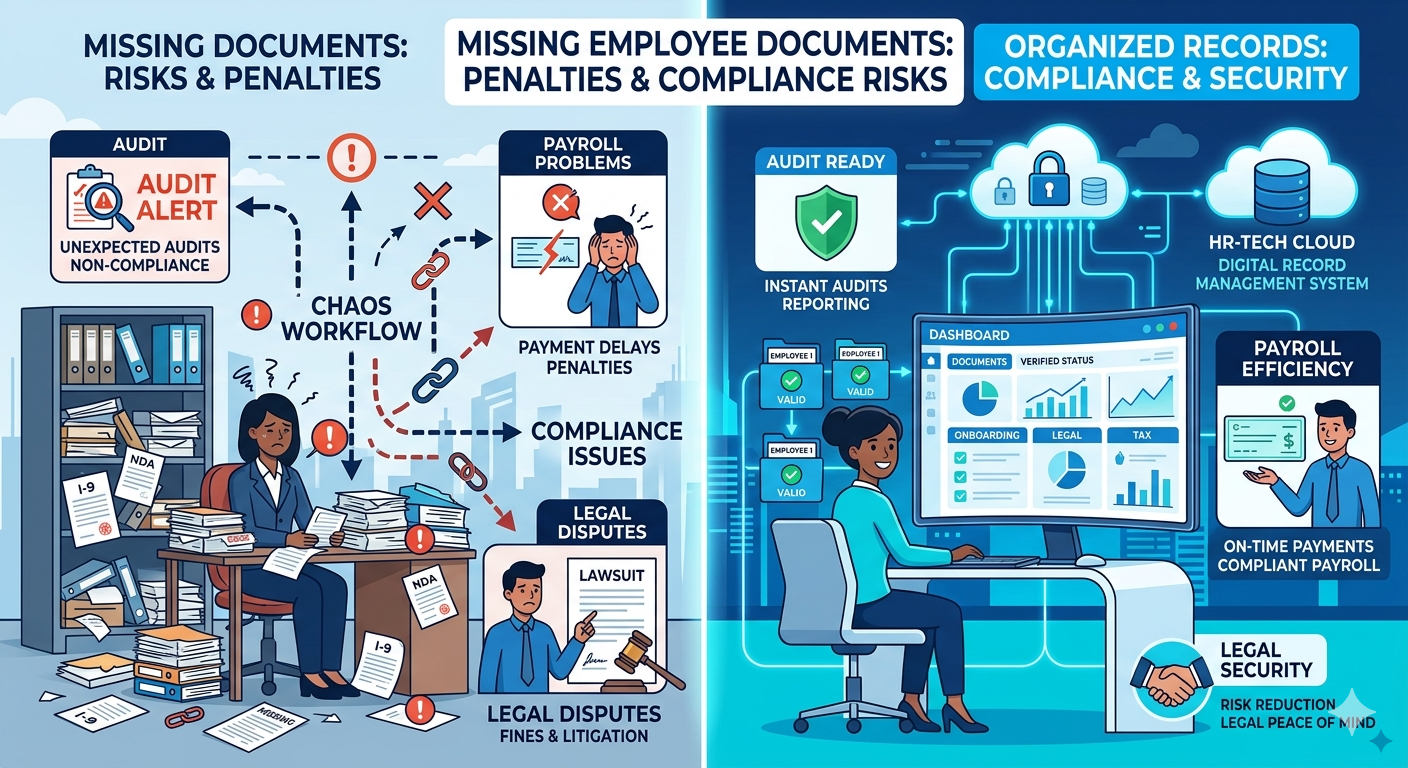
Missing Employee Documents: Penalties & Compliance Risks
Missing employee documents can trigger penalties, audits, and disputes. Learn how documentation gaps affects compliance and how businesses can prevent risks.
Many businesses underestimate documentation risk. Employee documents often feel like background work. Something to check later. That mindset causes trouble. Penalties usually appear when companies least expect them- during an inspection, during an audit, or after an employee complaint. By then, it is too late to fix gaps. Missing documents affect payroll, compliance, and legal safety. This blog explains what missing employee documents really mean, which documents companies often miss, how gaps trigger penalties, and how businesses can protect themselves. Understanding missing employee documents penalties early helps companies avoid stress, disruption, and unnecessary cost.
What Are “Missing Employee Documents”?
Missing employee documents do not always mean a company never collected them. In many cases, documents exist but remain incomplete, outdated, or scattered. Missing can mean unsigned appointment letters. Expired KYC details. Old wage registers. Or exit records that were never closed properly.
These gaps show up across HR, payroll, and compliance. For HR, missing documents weaken employment records. For payroll, they cause wrong salary and deduction calculations. For compliance, they break statutory filing trails.
Under employee documentation compliance India, authorities expect employers to maintain clear, updated, and retrievable records. Documents must match system data. When they do not, authorities treat them as missing. That is how documentation gaps turn into compliance issues.
Key Employee Documents Commonly Missed
-
Appointment Letters: Appointment letters top the list. Many companies issue offer letters but delay appointment letters. During inspections, this creates problems.
-
KYC Documents: KYC documents come next. PAN, Aadhaar, address proof, or bank details often remain outdated. This affects tax deductions and salary credits.
-
Nomination Forms: Nomination forms also get ignored. PF nomination forms like Form 2 or Form F often remain unsigned or uncollected. These gaps surface during PF audits.
-
Attendance and Wage Records: Attendance and wage records cause frequent trouble. Registers remain incomplete. Data stays inconsistent across months. Inspectors check these closely.
-
Exit Documentation: Exit documentation is another weak area. Resignation letters, acceptance records, and full and final settlement proof often stay missing or informal. These gaps increase missing employee documents penalties during disputes and audits.
How Missing Documents Trigger Penalties
-
During Labour Inspections: During labour inspections, officers review employment letters, registers, and statutory records. Missing or inconsistent documents raise red flags. Inspectors may issue notices or demand explanations.
-
During PF / ESIC Audits: PF and ESIC audits rely on employee data, wage records, and contribution proof. Missing nomination forms or mismatched wage data cause audit objections. Authorities may levy damages or interest when records do not support filings.
-
During Employee Disputes: Employee disputes also expose gaps. When employees challenge salary, benefits, or termination, courts and labour officers ask for documents. Missing records weaken the employer’s case.
-
During Tax Scrutiny: Tax scrutiny brings another layer of risk. Payroll records must match TDS filings. Missing or incorrect documents raise compliance queries. These situations often lead to HR compliance penalties India that disrupt normal operations.
Types of Penalties Businesses Face
-
Monetary Penalties: Monetary fines are the most visible outcome. Authorities may impose fines when documents fail inspection checks.
-
Interest and Damages: Interest and damages follow in statutory cases. PF and ESIC authorities may apply interest on delayed or unsupported contributions.
-
Legal Notices: Interest and damages follow in statutory cases. PF and ESIC authorities may apply interest on delayed or unsupported contributions.
-
Operational Disruption: Operational disruption causes hidden costs. HR teams divert time. Payroll stops. Leadership gets involved. Business focus shifts from growth to firefighting. These consequences often start with small gaps in employee documentation compliance India.
Why Small and Growing Businesses Are Most at Risk
-
Small and growing businesses rely on informal HR systems. Founders handle HR. Teams use spreadsheets. Processes stay manual.
-
Ownership remains unclear. HR assumes payroll handles documents. Payroll assumes HR updated records. No one verifies.
-
Growth adds pressure. Hiring increases. Documentation struggles to keep pace. Compliance awareness lags behind scale.
These factors increase exposure to missing employee documents penalties. Most small businesses realize the risk only when authorities step in or employees raise complaints.
How to Prevent Documentation-Related Penalties
-
Start with a clear document checklist. Define documents needed at joining, during employment, and at exit.
-
Maintain one central storage system. Digital records help with access, backups, and version control.
-
Update documents whenever changes happen. Salary revisions. Transfers. Role changes. Exits.
-
Assign ownership. One team must own documentation accuracy. HR and payroll must review records together.
-
Regular internal reviews catch gaps early. These steps reduce HR compliance penalties in India and protect business continuity.
Complete Documentation Prevents Compliance Risks
Missing documents are not small issues. They carry real cost. When businesses ignore documentation, penalties follow quietly and suddenly. Strong systems prevent this. Accurate records protect payroll, compliance, and legal standing. Understanding missing employee documents penalties helps businesses act early instead of reacting late.
At Kriotech, we help organisations strengthen employee documentation compliance India through structured processes, regular checks, and audit-ready systems. We reduce HR compliance penalties India by fixing documentation gaps before they turn into business risks.
Speed Optimized

Form 2, Form F & Other PF Nomination Forms Explained
A simple employer guide to PF nomination forms like Form 2 and Form F. Learn when to collect them, why they matter, and how to stay compliant.
- Licensing & Statutory Registrations
A simple employer guide to PF nomination forms like Form 2 and Form F. Learn when to collect them, why they matter, and how to stay compliant.