
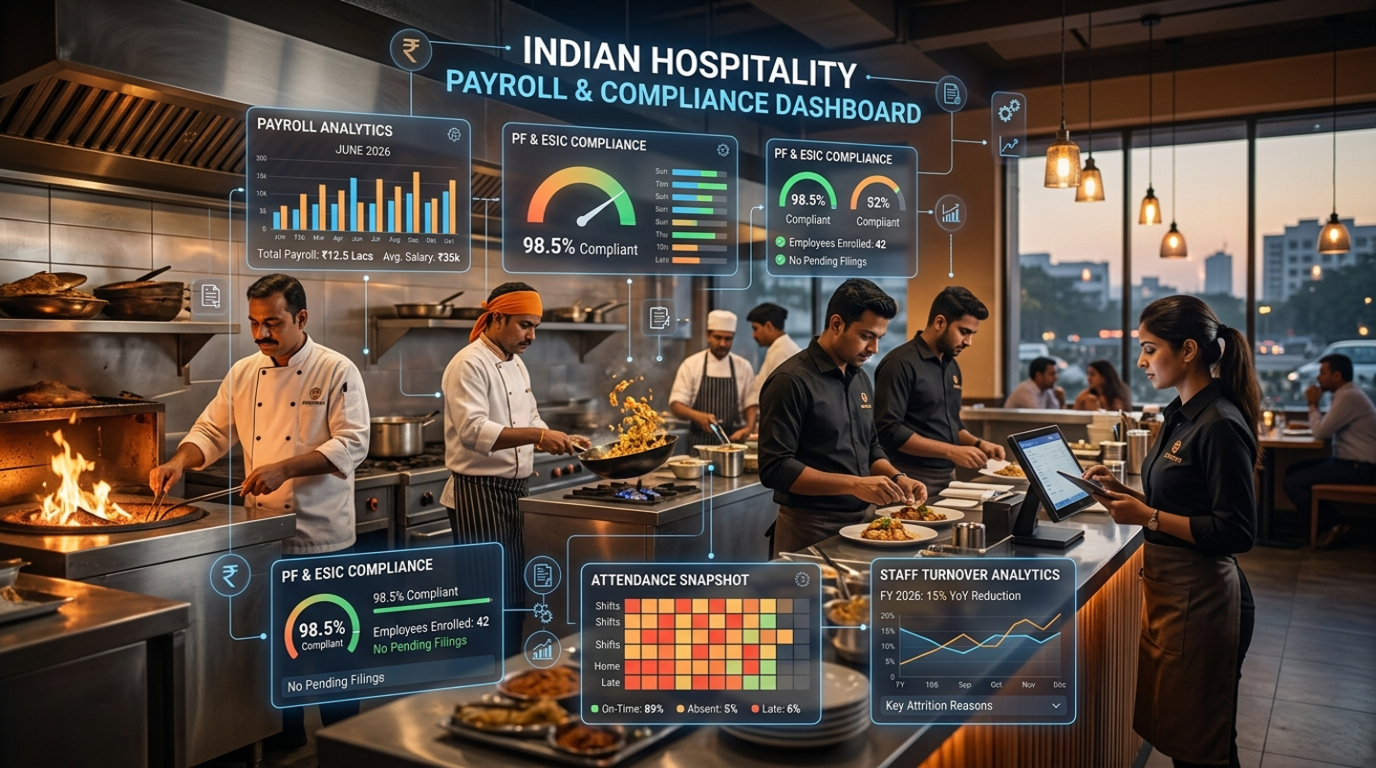
Payroll Outsourcing for the Restaurant and Hospitality Sector in 2022
Understand payroll outsourcing for India’s restaurant and hospitality sector in 2022, including high staff turnover, PF and ESIC compliance, tips and service charge taxation, and multi-outlet statutory obligations. Learn how outsourcing helps restaurants streamline payroll processing, ensure compliance, and manage seasonal and casual workforce complexities efficiently.
India's restaurant and hospitality sector has had a complex two years. After the shutdowns and losses of 2020 and 2021, 2022 is a year of recovery, reopening and rapid re-staffing. As businesses bring back workers, hire new staff and manage the post-pandemic transition from skeleton crew to full operational strength, payroll and compliance obligations are growing rapidly - often faster than the HR infrastructure can keep pace with. In this context, payroll outsourcing is one of the most practical operational investments a restaurant or hospitality business can make in 2022.
The Specific Payroll Challenges of Restaurants and Hospitality in 2022
High and rapid staff turnover
Restaurants and hotels consistently have among the highest attrition rates of any sector in India. Each exit triggers full and final settlement computation, PF exit formalities, ESIC deregistration and statutory document issuance. Each new joining triggers PF and ESIC enrolment, Shops Act registration update and minimum wage verification. At high turnover levels, this is a continuous, high-volume compliance process.
Part-time, casual and event workers
Many restaurants use casual workers for event catering, peak-season coverage and weekend staff augmentation. The payroll and compliance treatment of these workers - particularly their PF and ESIC eligibility thresholds, minimum wage computation and attendance tracking - is often inconsistent. Casual workers with total compensation that crosses PF or ESIC thresholds must be enrolled even if they work for only part of the month.
Tips and service charges
The tax treatment of tips and service charges is a recurring payroll question in the hospitality sector. Service charges collected from customers and distributed to staff are typically treated as salary and subject to TDS. Tips directly received by employees from customers may be exempt under Section 10(9) of the Income Tax Act if received from a client. The correct treatment must be reflected in payslips and TDS computation.
Multi-outlet PT and Shops Act management
A restaurant chain with outlets across Ahmedabad, Surat and Mumbai must maintain separate Shops Act registrations for each outlet, manage PT compliance for Maharashtra and Gujarat employees separately, and track minimum wages per state and worker category across all locations.
India's restaurant sector employed approximately 7.3 million workers pre-pandemic. Recovery in 2022 is creating rapid re-staffing across the sector, with EPFO data reflecting strong hospitality sector subscriber additions. (Source: National Restaurant Association of India, 2022; EPFO Payroll Data, 2022)
How Payroll Outsourcing Supports Restaurant Businesses in 2022
- Continuous PF and ESIC enrolment and exit processing for high-turnover staff.
- Correct statutory computation for part-time and casual workers.
- Service charge and tips TDS treatment managed correctly in payslip computation.
- Multi-outlet Shops Act registration tracking and renewal calendar.
- State-specific PT compliance for multi-state chains.
- Labour Code readiness - CTC structure review for kitchen, service and management staff.
"For a restaurant recovering from 2020 and 2021 in 2022, payroll outsourcing is not overhead. It is the operational infrastructure that lets the business scale without compliance falling behind."
Payroll outsourcing for restaurants and hospitality businesses. Talk to Kriotech. Visit kriotech.in
Speed Optimized
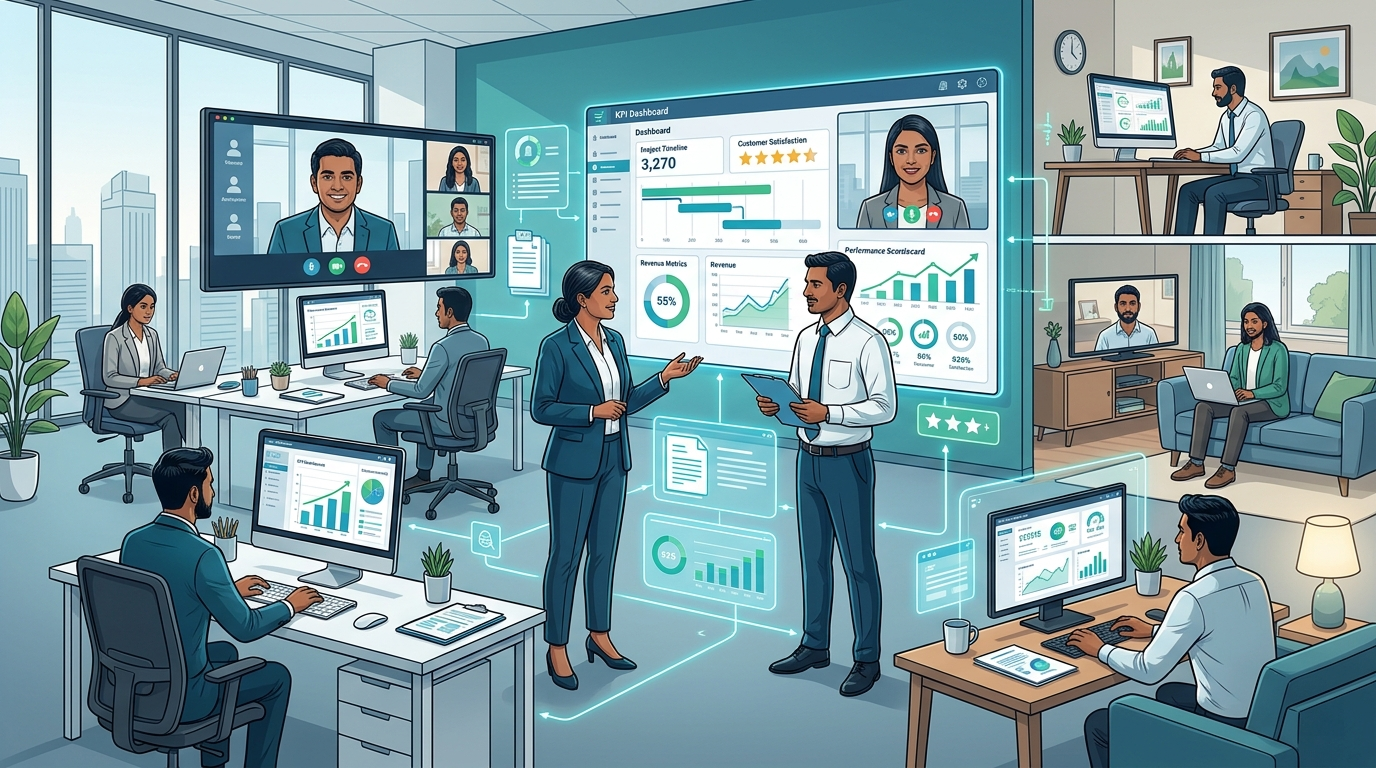
Managing Performance in a Hybrid Workplace: What Indian Businesses Must Get Right in 2022
Learn how to manage performance in hybrid workplaces by shifting from presence-based evaluation to outcome-based KPIs, feedback, and fair assessment.
- KRA / KPI & Performance Advisory
Learn how to manage performance in hybrid workplaces by shifting from presence-based evaluation to outcome-based KPIs, feedback, and fair assessment.