
.png)
How HR Outsourcing Reduces Audit and Inspection Risks
Learn how HR outsourcing helps Indian businesses reduce audit and inspection risks through better documentation, payroll accuracy, and labour-law compliance.
Audit and inspection notices worry many business owners in India. Labour authorities from PF, ESIC, factory inspectorates, and shops & establishment departments check compliance in workplaces regularly. These visits happen because authorities want to ensure that wages, social security, safety, and statutory filings are in order. Many HR teams panic when an inspection notice arrives because they have not prepared documentation in advance. This panic often worsens outcomes and increases business stress. That is where HR outsourcing audit support plays a role. With the right systems, documentation, and process, companies can face inspections and audits calmly. This blog explains how outsourcing HR work helps reduce labour inspection compliance risk and keeps your business ready.
Understanding Labour Audits and Inspections in India
Types of Inspections Businesses Face
Indian companies may face different kinds of inspections:
-
PF and ESIC audits: Authorities examine employee registrations, contributions, and returns related to the Employees’ Provident Funds and Employees’ State Insurance rules. These audits verify that employers enrolled eligible workers and deposited correct contributions.
-
Factory and labour inspections: Inspectors check compliance with labour laws such as minimum wages, attendance, safety, and statutory registers under acts like the Factories Act or Shops & Establishment Acts. They look at wage registers, welfare fund payments, and safety documentation.
Understanding the type of inspection helps businesses prepare and reduce risk.
Common Triggers for Inspections
Inspections often begin due to the following:
-
Complaints from employees about wages, deductions, or unsafe conditions.
-
Data mismatches between statutory filings and payroll records. If PF/ESIC contributions or wage reports do not align with documentation, systems flag potential issues.
Inspections are not always random. They often come when records don’t match or when complaints arise.
Why Businesses Fail During Audits
Incomplete or Incorrect Documentation
One of the biggest reasons companies fail audits is incomplete records. Inspectors routinely ask for attendance records, wage registers, PF/ESIC challans, leave records, and pay slips. If any register is missing, outdated, or inaccurate, it raises questions about compliance.
Inconsistent Payroll and Compliance Data
Compliance depends on accurate payroll processing. When salary structures, deductions, or contributions do not align with statutory requirements, auditors treat them as red flags. Salary structure errors or mismatches in deductions often lead to deeper scrutiny and longer inspections.
Lack of Inspection Preparedness
Many internal HR teams lack a clear response protocol for inspections. They do not keep records in one place or have a defined audit trail that links payroll figures with statutory filings. This lack of readiness makes inspections longer and more stressful.
How HR Outsourcing Minimises Audit and Inspection Risk
Proper HR outsourcing can make audit risk manageable and predictable.
Audit-Ready Documentation Systems
Outsourcing partners set up systems that ensure documentation stays current.
-
They maintain real-time updates to registers and records.
-
They use version control, tracking every change gets tracked and can be shown to inspectors.
These practices save time and reduce errors during inspections.
Payroll and Compliance Alignment
Strong HR outsourcing teams align payroll data with statutory compliance.
-
They ensure accurate statutory deductions for PF, ESIC, PT, TDS, and other statutory items every month.
-
They prepare clean filing records that match payroll and statutory returns.
This alignment prevents mismatches that often trigger deeper inspections.
Pre-Audit Checks and Reviews
Outsourcing partners routinely review compliance health:
-
They identify risk points before audits.
-
They correct gaps such as missing registers or misaligned data early.
Pre-audit checks help businesses fix issues before regulators find them.
Inspector Coordination and Support
During an inspection, teams must produce documents quickly.
-
Outsourcing partners often assist with document submission in the prescribed formats.
-
They help with clarification handling, explaining records clearly to authorities.
This reduces confusion, speeds up inspections, and cuts the risk of penalties.
Long-Term Impact of Outsourced Compliance on Risk Reduction
Outsourcing statutory compliance does more than help during inspections. It brings long-term benefits:
-
Lower penalties: Accurate records, timely filings, and proper deductions reduce the chance of fines.
-
Improved employer credibility: Consistent compliance signals trustworthiness to regulators and employees alike.
A business that stays inspection-ready builds stronger credibility and avoids unexpected risks.
Preparedness Is the Best Audit Strategy
Audits and inspections are a normal part of running a business in India today. Without systems and documentation in place, companies often face longer inspections, deeper scrutiny, and potential penalties. HR outsourcing audit support brings discipline to documentation, payroll alignment, pre-audit checks, and regulatory interaction. It reduces stress and makes compliance predictable rather than reactive. Instead of scrambling when notices arrive, you can face authorities with confidence. We, at Kriotech, provide structured HR outsourcing that helps maintain audit-ready records, align payroll with statutory laws, and support you during inspections while you focus on daily operations and growth.
Speed Optimized
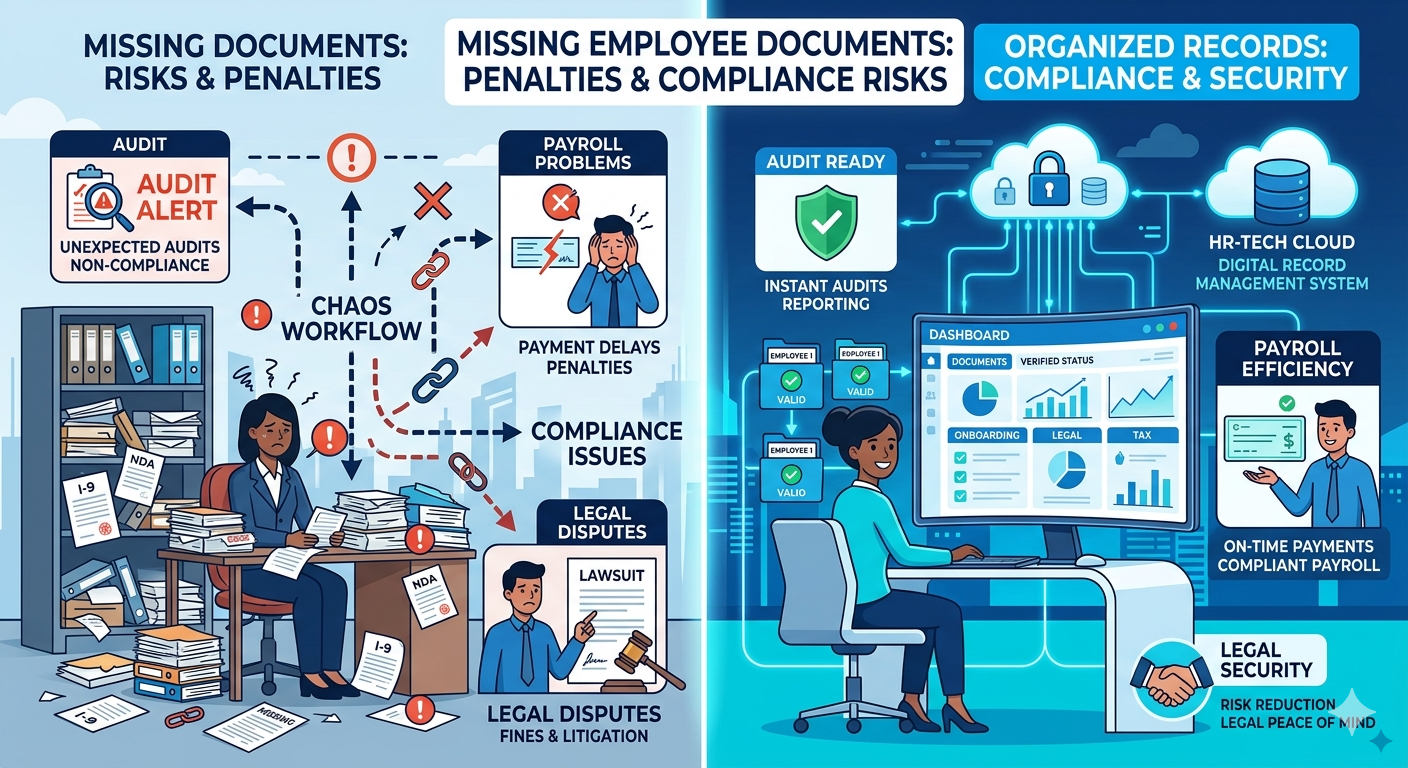
Missing Employee Documents: Penalties & Compliance Risks
Missing employee documents can trigger penalties, audits, and disputes. Learn how documentation gaps affects compliance and how businesses can prevent risks.
- Compliance Outsourcing
Missing employee documents can trigger penalties, audits, and disputes. Learn how documentation gaps affects compliance and how businesses can prevent risks.