
.png)
What HR Tasks Should You Outsource First? A Practical Guide
Explore which HR tasks to outsource first to reduce compliance risk, payroll errors, and HR workload. A practical guide for growing businesses.
Many companies know they want to outsource HR; however, they feel stuck at the first question. What should we outsource first? Some businesses try to outsource everything at once. Others outsource the wrong tasks and end up with more confusion than relief. The truth is, not all HR tasks carry the same level of risk. Some affect compliance directly. Some consume time every month. Some require deep accuracy.
When companies start with the right HR tasks to outsource, they reduce errors, lower stress, and avoid disruption. This guide helps you identify high-impact HR tasks, prioritise outsourcing decisions, and move gradually instead of all at once.
How to Decide Which HR Tasks to Outsource First
Before outsourcing anything, companies need a simple filter. The goal is not speed. The goal is control and risk reduction.
Here are the main factors to evaluate:
-
Compliance exposure: Tasks linked to labour laws, payroll, and filings carry legal risk.
-
Frequency and repeatability: Monthly or recurring tasks drain time if handled manually.
-
Need for specialised knowledge: Some HR work requires up-to-date legal or statutory understanding.
-
Dependency on accuracy: A small error in some tasks can lead to penalties or disputes.
It also helps to separate HR work into two buckets.
Strategic HR tasks like culture, hiring decisions, and performance management usually stay in-house. Operational and compliance-heavy HR tasks work better under outsourcing. A phased approach works better than a full handover because it keeps disruption low and confidence high. This is one of the most practical HR outsourcing tips for growing businesses.
Payroll Management: The First HR Task Most Companies Outsource
Why Payroll Is High Risk
Payroll sits at the centre of trust and compliance. Every salary cycle touches employees, management, and statutory authorities.
Payroll has a direct link to:
-
Salary payments
-
Employee trust
-
Statutory deductions
Even small payroll errors can lead to:
-
Employee complaints
-
Compliance penalties
-
Audit risks
Because payroll repeats every month, mistakes compound quickly. This makes payroll one of the first and most logical first HR outsourcing tasks for many organisations.
What Payroll Outsourcing Covers
When companies outsource payroll, they usually hand over:
-
Monthly salary processing
-
Payslip generation and reimbursements
-
PF, ESIC, Professional Tax, and TDS calculations
-
Payroll compliance alignment with statutory rules
Outsourcing payroll brings structure and accuracy. It also ensures payroll data stays aligned with compliance requirements, reducing risk month after month.
Statutory Compliance and Filings
Why Compliance Tasks Are Ideal to Outsource
Statutory compliance creates constant pressure for internal teams. Labour laws change often. States follow different rules. Deadlines stay strict.
Compliance tasks suit outsourcing because:
-
Labour-law updates happen frequently
-
State-wise rule variations add complexity
-
Penalties apply for delays or errors
Internal HR teams often manage compliance alongside many other responsibilities, which increases the chance of missing something important.
Common Compliance Tasks Businesses Outsource
Companies commonly outsource:
-
PF and ESIC registrations and filings
-
Professional tax and labour welfare fund compliance
-
Statutory registers and returns
-
Audit and inspection support
These tasks demand consistency and legal awareness. Outsourcing them helps businesses stay compliant without overloading internal teams. This is why compliance often appears high on the list of HR tasks to outsource.
Employee Documentation and Records Management
Why Documentation Creates Hidden Risks
Employee documentation rarely feels urgent until something goes wrong. Missing or outdated records often surface during audits, disputes, or inspections.
Documentation risks include:
-
Missing or outdated employee records
-
Inconsistent formats across teams
-
Poor audit readiness
Without a structured system, records remain scattered across emails, folders, and spreadsheets.
Documentation Tasks Suitable for Outsourcing
Companies often outsource:
-
Offer letters, appointment letters, and confirmation letters
-
Employee master data maintenance
-
Nomination forms and KYC records
-
Exit documentation and full and final settlement records
Outsourcing documentation improves consistency and makes records audit-ready. It also reduces dependency on individuals. These benefits align well with long-term HR outsourcing tips for stability.
Employee Onboarding and Exit Processes
Onboarding Tasks to Outsource
Onboarding sets the base for payroll and compliance. When handled loosely, errors carry forward.
Tasks suitable for outsourcing include:
-
Document collection and verification
-
Statutory setup for PF and ESIC
-
Payroll readiness and data entry
Outsourcing onboarding ensures employees enter the system correctly from day one.
Exit and Separation Tasks to Outsource
Exits carry legal and financial implications. Companies often outsource:
-
Resignation documentation
-
Full and final settlement calculations
-
Relieving and experience letters
Structured exit handling protects businesses from disputes and compliance gaps.
HR Reporting and Compliance Monitoring
Reporting helps businesses stay ahead instead of reacting late. Outsourcing works well here because it adds discipline.
Common outsourced reporting tasks include:
-
Monthly compliance calendars
-
Payroll and statutory reports
-
Audit-ready data preparation
-
Early identification of compliance gaps
Monitoring works better under an outsourcing model because it follows defined schedules and checks, rather than ad-hoc reviews. This strengthens control over HR tasks to outsource that impact compliance.
HR Tasks You Should Usually Keep In-House Initially
Not all HR work should be outsourced. Leadership and people-centric tasks still need internal ownership.
These tasks usually stay in-house:
-
Culture building and engagement
-
Performance management
-
Hiring decisions and people strategy
-
Employee grievance handling
Outsourcing works best for execution and compliance. Leadership decisions need context, empathy, and alignment with company values. Keeping this balance is one of the smartest HR outsourcing tips.
Phased HR Outsourcing: A Practical Approach
A phased approach reduces risk and builds confidence.
A common step-by-step model looks like this:
-
Payroll and statutory compliance
-
Documentation and employee records
-
Onboarding and exit processes
Gradual transition helps teams adjust. It also allows businesses to test outsourcing effectiveness without losing control. This method suits companies exploring their first HR outsourcing tasks.
Outsource HR Tasks That Create Risk, Not Control
There is no single right answer for every business. The best place to start depends on risk, complexity, and internal capacity. Compliance-heavy and repetitive tasks usually come first. Strategic and people-driven work stays in-house. Outsourcing should reduce stress, not decision authority. We, at Kriotech, help businesses build structured HR, payroll, and compliance systems through phased and practical HR outsourcing. Our focus stays on accuracy, compliance, and control, so organisations can grow with confidence instead of firefighting HR risks.
Speed Optimized
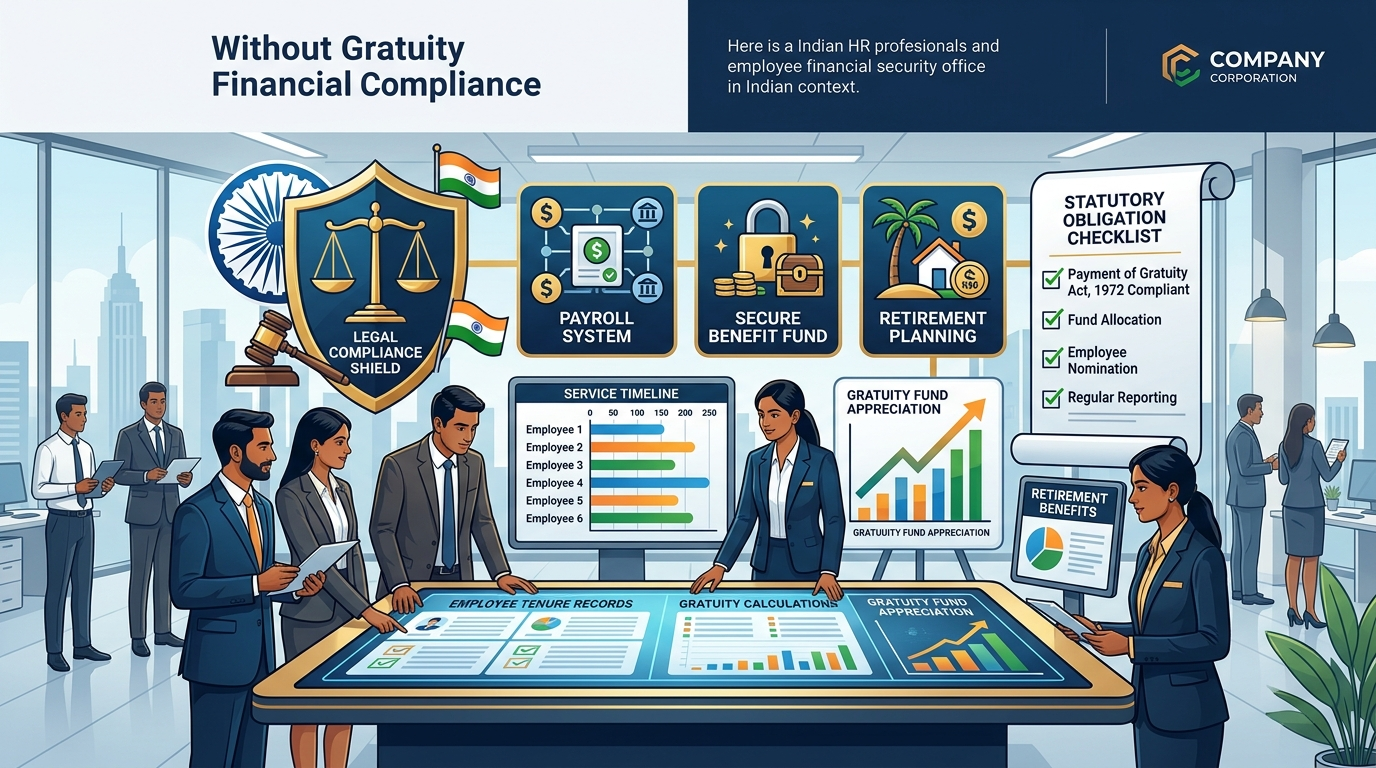
Gratuity Compliance in 2022: Calculating, Provisioning, and Managing India's End-of-Service Obligati
Understand gratuity compliance under the Payment of Gratuity Act. Learn eligibility, calculation, provisioning, payment timelines, and employer obligations.
- Compliance Outsourcing
Understand gratuity compliance under the Payment of Gratuity Act. Learn eligibility, calculation, provisioning, payment timelines, and employer obligations.