

Labour Inspector Visits: What Factories Must Know and How to Be Prepared in 2022
Learn how factories can prepare for Labour Inspector visits in 2022. Understand inspection checklists, record requirements, compliance rules, and best practices.
A visit from a Labour Inspector can be a stressful event for factory HR managers who are not prepared. Under the Factories Act, 1948 and other labour statutes, Inspectors of Factories have the authority to enter factory premises at any time during working hours, inspect any part of the factory, examine records, question workers, and take samples or measurements. In 2022, with several states transitioning to risk-based inspection frameworks and reducing routine inspections for compliant establishments, the focus of inspections has shifted toward factories with complaint histories or flagged compliance gaps. Understanding what inspectors look for and how to prepare is a critical factory HR competency.
What Labour Inspectors Check in Factories
A typical Factory Inspector visit covers: the factory's registration certificate and current licence (which must be displayed at the factory); attendance records (Form 25 or equivalent state-specific form) to verify working hours compliance; wage registers (Form 17 or equivalent) to verify minimum wage compliance and correct wage computation; overtime registers (Form 13) to verify overtime payment at double the ordinary rate; accident registers; health records for workers in hazardous processes; safety equipment maintenance records; welfare facility inspection (canteen, washrooms, first aid boxes); ESI and EPF contribution challans; and POSH annual report filings. The Inspector may also conduct private interviews with workers to verify that actual practices match recorded data.
Risk-Based Inspection: The 2022 Trend
Several states in 2022 are implementing risk-based inspection frameworks under the guidance of the Ministry of Labour and Employment's Shram Suvidha Portal. Under these frameworks, factories are classified by risk level based on factors such as the nature of manufacturing process (hazardous vs. non-hazardous), compliance history, workforce size, and sector. High-risk factories receive more frequent and thorough inspections, while low-risk factories may be inspected less frequently, with the compliance burden shifted partly to self-certification. Factories that maintain consistent compliance records benefit from this system; those with irregular compliance histories face heightened scrutiny.
Record Maintenance: The Foundation of Inspection Readiness
The most inspection-ready factories maintain complete, current, and accessible records at all times, not just when an inspection is anticipated. This means: employment registers showing every employee's name, designation, wages, and date of joining; wage registers showing monthly wages paid, deductions, and net payment for each employee; attendance registers or biometric data showing daily attendance and hours worked; EPF and ESI contribution challans for the past 12 months; Factory licence and registration certificate, prominently displayed; POSH policy notice displayed in a language workers understand; first aid registers; and safety equipment maintenance logs. These documents should be maintained either in physical registers (in the prescribed format) or in digital systems that can generate printed records for inspection.
Handling an Inspector's Visit Professionally
When a Labour Inspector arrives at your factory, the HR manager or Factory Manager should receive them formally, verify their authorisation card, and provide them access to all requested areas and records in a professional and cooperative manner. Do not obstruct, delay, or refuse inspection rights; this is a criminal offence. Keep a log of the Inspector's visit, including the date, name and designation of the Inspector, areas covered, records examined, and any verbal observations made. If the Inspector issues a written notice or improvement notice, acknowledge receipt in writing and prepare a formal response within the specified timeline. Addressing inspection observations promptly and completely builds a positive compliance reputation with the Inspectorate.
Kriotech HR Management prepares factories for labour inspections through records audits, compliance gap assessments, and documentation support. Be ready for any inspection, any time. Contact us today.
Speed Optimized
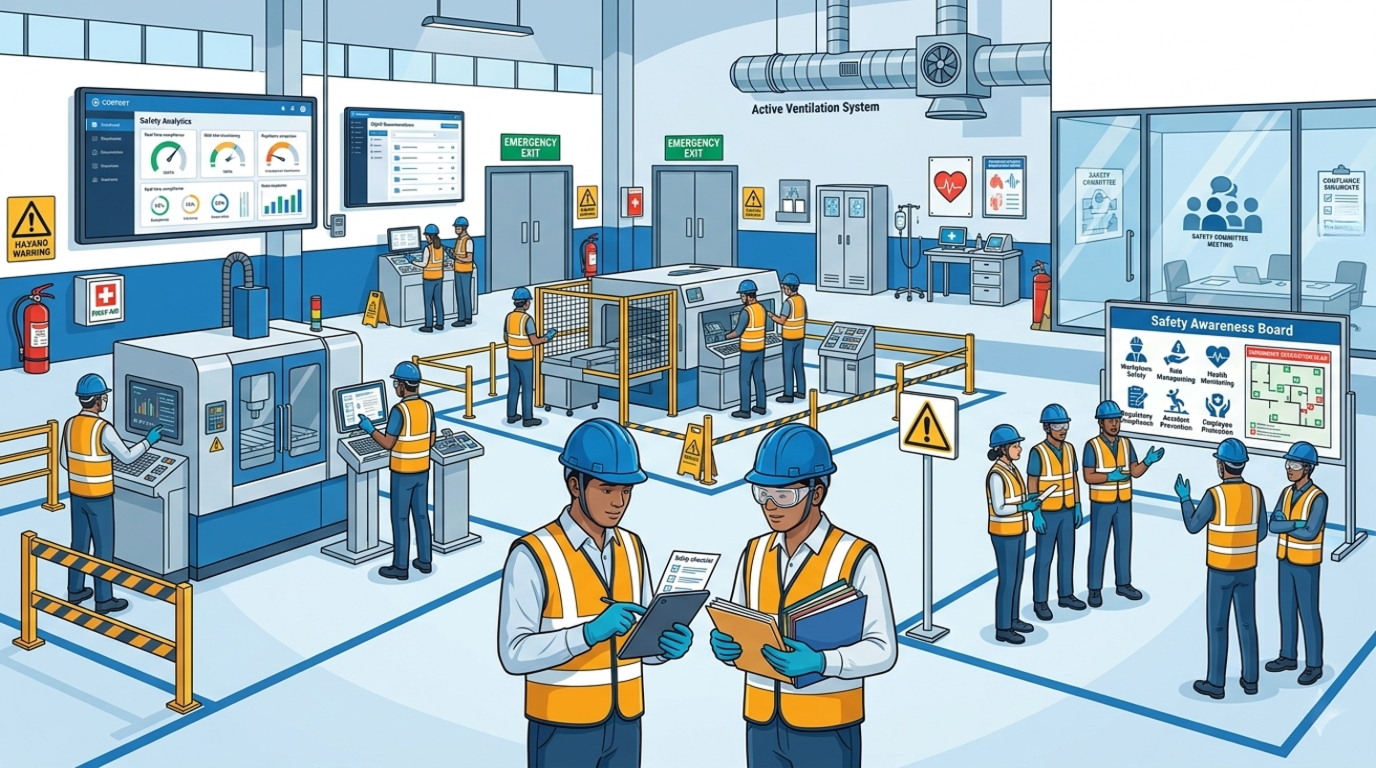
Factory Safety Compliance in 2022: Understanding the Factories Act and OSH Code
Learn the key factory safety compliance requirements under the Factories Act and OSH Code in 2022. Discover safety obligations, documentation practices, inspection readiness, and workplace risk management strategies for Indian manufacturers.
- Factory HR & Compliance Management
Learn the key factory safety compliance requirements under the Factories Act and OSH Code in 2022. Discover safety obligations, documentation practices, inspection readiness, and workplace risk management strategies for Indian manufacturers.